Sam Bayard's blog

Documenting Your Vote: Ohio Election Laws

Continuing our focus on swing states, I'll look today at the laws regulating polling place activities in Ohio. These laws may impact your ability to document your own voting experience through video and still photography, as well as your ability to carry out other newsgathering functions, such as interviewing other voters outside of polling places.

Ohio law does not expressly prohibit using a camera or video recorder inside a polling place while you are voting.  Section 3501.35(B) of the Ohio Revised Code states that no person other than an election official, employee, observer, or police officer may enter a polling place "except for the purpose of voting or assisting another person to vote." This could mean that any activity other than voting is prohibited, but the language does not compel this result. The photo above and others like it suggest that at least some Ohio poll workers allowed voters to take photographs inside of polling places during the 2008 Primaries.   read more »

Oregon Shield Law Protects Anonymous Commenter

Last week, an Oregon state judge ruled that Oregon's media shield law, found at Or. Rev. Stat. §§ 44.510 to 44.540, protected the identity of an anonymous commenter who posted allegedly defamatory statements on the Portland Mercury and Willamette Week websites.

According to the Portland Mercury, staff writer Amy Ruiz wrote a post in January 2008 about Portland mayoral candidate Sho Dozono.  In the comments section, a site user going by "Ronald" posted negative comments about Dozono's ties to a local businessman, Terry Beard.  The same commenter allegedly posted similar statements on the Willamette Week site. Beard filed a motion to compel the two online newspapers to give up "Ronald's" IP address before an Oregon state court.  The two competitors teamed up to oppose the discovery request and won.   read more »

Documenting Your Vote: Florida Election Laws

This post is another in our series looking at state election laws that regulate activities at polling places on Election Day.  These laws, which we cover from a general standpoint in the Documenting Your Vote section of our legal guide, may impact your ability to document your own voting experience through video and still photography, as well as your ability to carry out other newsgathering functions, such as interviewing other voters outside of polling places. Florida is sure to be a center of attention come November, given its swing-state status and notorious history. In this post, I'll look at how Florida's election laws affect these activities.   read more »

Documenting Your Vote: California Election Laws

The CMLP is currently doing research on the state laws regulating activities at polling places on Election Day.  Our specific focus is on laws that impact voters' ability to document their own voting experiences through video and still photography, as well as their ability to carry out other newsgathering functions, such as interviewing other voters outside of polling places.  In this post, I'll look at how California's election laws affect these activities.

The California law with most immediate relevance to citizen media creators who want to document the vote is California Elections Code § 18541.  This statute makes it a crime for anyone, within 100 feet of a polling place, to "photograph, videotape, or otherwise record a voter entering or exiting a polling place" with "the intent of dissuading another person from voting." The 100-foot zone is measured from the interior voting area itself, not from the exterior of the building; so most of it will likely be inside the polling place.

Because section 18541 requires intent to dissuade someone from voting, it does not appear to ban outright the use of cameras and recording equipment in the 100-foot zone. But it does make such activity risky.  Your intent is invisible. While you may not have any intention of dissuading anyone from voting, poll workers might see your conduct differently than you do. You could ultimately prevail before a court if the state chose to prosecute you, but you might still get kicked out of the polling place on Election Day and/or have to deal with some gigantic legal hassles.   read more »

Big Media Challenges Constitutionality of Minnesota Polling Restriction

ABC, NBC, CBS, CNN, Fox News, and the Associated Press have joined forces to challenge a Minnesota statute that forbids non-voters to stand within 100 feet of the entrance to a polling place on election day.  In their complaint, the media companies allege that this restriction, as applied to their planned exit polling activities, violates the First Amendment.

The law in question, Minnesota Statutes § 204C.06(1), says:

An individual shall be allowed to go to and from the polling place for the purpose of voting without unlawful interference. No one except an election official or an individual who is waiting to register or to vote shall stand within 100 feet of the entrance to a polling place. The entrance to a polling place is the doorway or point of entry leading into the room or area where voting is occurring.

The Minnesota legislature amended the law in April 2008; the previous version measured the 100 foot zone from the room inside the polling place where voting took place.  Under the previous law, in 2004 and 2006 media representatives apparently engaged in exit polling immediately outside or within approximately 25 feet of the outside door to polling places in Minnesota.

The media organizations argue that the new 100 foot restriction will significantly impair their ability to engage in accurate exit polling because voters are more likely to get into a car and drive away before reaching the 100 foot mark, because it becomes harder to distinguish voters from non-voters as the distance increases, and because it becomes impossible to select polling subjects in a scientifically selected pattern at this distance (thus undermining their sampling methodology).     read more »

Car Dealership Appeals ConsumerAffair's CDA 230 Win

New York-based Nemet Chevrolet filed a notice of appeal to the Fourth Circuit last week, challenging a district court's dismissal of its amended complaint against ConsumerAffairs.com based on section 230 of the Communications Decency Act (CDA 230). The appeal presents some interesting questions about whether a website loses CDA 230 immunity by encouraging negative consumer commentary and using drop-down boxes to enable users to categorize their submissions.  To my knowledge, this is the first federal appeal raising these issues since the Ninth Circuit's controversial decision in Fair  Housing Council v. Roommates.com, LLC, 521 F.3d 1157, 1175 (9th Cir. 2008).   read more »

Marc Randazza: First Amendment Juggernaut

My good friend Marc Randazza has given me the green light on an exciting piece of news.  On September 11, 2008, Florida Circuit Court Judge George Sprinkle entered a default judgment in favor of Randazza's client Larry Giles, operator of the Veranda Park News, an online newspaper offering observations and commentary on events and aesthetic issues in Giles's development community.  The court awarded Giles approximately $180,000 in treble damages under one of Florida's anti-SLAPP statutes, Fla. Stat. § 720.304 (4), which protects homeowners who engage in petitioning activity in matters related to their homeowners' associations.

On the receiving end of the default judgment is Veranda Partners, LLC, a large real estate developer who owns a controlling interest in the Veranda Park development in Orlando where Giles owns a home.  The developer sued Giles in 2007, complaining that statements appearing on his website were defamatory.  Allegedly, Giles published statements indicating that Veranda Partners misspent homeowners' dues, changed landscaping to unfairly enrich itself, and partnered with the City of Orlando in order to gain an unlawful business advantage.   read more »

YouTube Changes Guidelines, Senator Lieberman Gets Partial Victory on Terrorist Videos

Taking full advantage of the seventh anniversary of 9/11, YouTube announced changes to its community guidelines last week, prohibiting the upload of videos inciting others to commit violent acts.  The change comes several months after Senator Joe Lieberman pressured YouTube to remove videos not only inciting violence, but also content "that can be readily identified as produced by Al-Qaeda or another [Foreign Terrorist Organization]," through logos such as these:   read more »

Jones Day Gets Trademark Law Wrong, Squelches Legitimate Reporting

Paul Alan Levy of Public Citizen published a fantastic post on Friday about big law firm Jones Day's lawsuit against BlockShopper.com, an online real estate news website covering Chicago, South Florida, Las Vegas, and St. Louis. The website reports on what's happening in the local real estate markets -- who's buying, who's selling, where, what price, etc.  It focuses on fancy neighborhoods where lawyers and other professionals frequently buy homes and often mentions the professional affiliations of the buyers and sellers.  The lawsuit arose out of BlockShopper's reports on two condominium purchases by Jones Day associates Dan Malone Jr. and Jacob Tiedt.  In the reports, BlockShopper used Jones Day's trademark (its name) to identify the law firm as Malone and Tiedt's employer and linked from each associate's name to their biographies on the firm's website (here and here).  Levy aptly characterizes the absurdity of Jones Day's claims:   read more »

Boston City Council: What Are They Hiding?

Journalism professor Dan Kennedy has a great post today at Media Nation about the Boston City Council's review of an 80-page report that it commissioned urging the state legislature to exempt it from the Massachusetts open meetings laws. He takes issue with statements made by councilors complaining that the law is "confusing" and creates a "chilling effect." Remarkably, the report contends that the open meetings laws violate the councilors' free speech rights, according to the Boston Herald. I'd like to see the councilors make that claim to a judge with a straight face.  I heartily agree with Kennedy's biting analysis:

Councilor Michael Flaherty is quoted as saying that the law creates a "chilling effect," claiming, "You can't even have a conversation with colleagues in the hallway or in a session." That's an interesting observation. The law says that a quorum — that is, a majority — of members cannot discuss official business outside the context of a legal, publicly announced meeting.

If Flaherty had said, You can't even have a conversation in the hallway with six or more colleagues about city business, that would be accurate. It would also underscore the absurdity of his complaint.
  read more »

Montana Shield Law Protects Anonymous Commenters

Judge Todd Baugh of Montana's 13th Judicial District ruled on Wednesday that Montana's shield law protects an online newspaper from having to disclose the identities of anonymous commenters. The ruling treats anonymous commenters like other confidential sources, whose identities are commonly protected by state shield laws.

In an oral ruling from the bench, Judge Baugh granted The Billings Gazette's motion to quash a subpoena issued by Russ Doty, a former candidate for local political office. An article on the Gazette's website reports that Doty had previously sued his political opponent, Brad Molnar, for libel. As part of this lawsuit, Doty subpoenaed the Gazette, requesting information about two pseudonymous posters to its website going by the monikers "CutiePie" and "Always, wondering."  According to the Reporters Committee, Doty believed that Molnar might have posted comments under these pseudonyms and that, even if they were not Molnar, the commenters would be helpful witnesses to prove damage to his reputation in the community.   read more »

New York Lawyer Sues Law Blogger for Reporting on Malpractice Lawsuit

Brooklyn attorney Marina Tylo filed a lawsuit against Andrew Lavoott Bluestone of the New York Attorney Malpractice Blog last week. According to the Summons with Notice, Tylo seeks $10,000,000 in damages for libel, negligence, intentional infliction of emotional distress, and tortious interference with prospective contractual relations, all arising out of the following statement on Bluestone's blog

Here is the full text cite for a legal malpractice case in which plaintiff's attorney served a summons before buying the index number. Khlevner v. Tylo, 10733/07.

Unless I'm missing something, this looks like a purely frivolous case, perhaps a situation where sanctions against Tylo are appropriate. As explained in our legal guide, section 74 of the New York Civil Rights Law codifies the fair report privilege. Under the statute, speakers cannot be held liable for giving a "fair and true report of any judicial proceeding, legislative proceeding or other official proceeding."   read more »

Dog Track Drops Lawsuit, Leaving Blogger Relieved But Rattled

The Arizona Star reports that the Tucson Greyhound Park has dropped its defamation lawsuit against blogger Karyn Zoldan of the End Tucson Greyhound Racing website and blog. Both parties agreed to dismissal of the suit, but Zoldan did not pay anything in return for the settlement. She did, however, make some minor changes to statements on the website, which apparently satisfied John Munger, the lawyer who represented the track in the lawsuit.

The track filed the lawsuit in Arizona state court in January 2008.  According to court documents, the dispute revolves around postings on Zoldan's site claiming that tens of thousands of dogs had died at the track during its sixty-year history, that one dog was "ruthlessly euthanized," and that the park had not been paying its taxes. The track also sued a number of other individuals and organizations, alleging that they were associated with Zoldan and the disputed content. In May, the track dismissed its claims against one of these defendants, the Greyhound Protection League, according to the Greyhound Network News.    read more »

Turkish Court Ends Latest YouTube Ban

The Guardian reports that a Turkish court has lifted the ban on YouTube in that country, imposed by an Ankara court in May 2008 after it determined that certain videos posted on the popular video-sharing site insulted Mustafa Kemal Atatürk, the founder of modern Turkey. Turkey has two notable laws restricting freedom of speech on the Internet -- (1) Article 301 of the Turkish Penal Code, which criminalizes the denigration of Turkishness, the Republic, and the foundation and institutions of the state; and (2) Internet Publication Law No. 5651, which regulates online content and includes a prohibition on insulting the memory of Ataturk (additional information on 5651).     read more »

Vegas Nightclub's Trademark Claims Against Blogger Likely a Bust

Privé Vegas, LLC and two of its owners sued Las Vegas-based blogger Michael Politz last week, alleging trademark infringement, dilution, and "disaparagement" under the Lanham Act, defamation, trade libel, tortious interference with business relations, and extortion. The company operates a nightclub called "Privé" in the Planet Hollywood Casino in Las Vegas.  Politz operates the TheVegasEye.com blog, which covers goings-on in the Las Vegas entertainment and hospitality industries and provides restaurant reviews and reports on celebrity sightings and the like.

Prive logo According to the complaint, filed in federal district court in Nevada, Politz published a post on July 23, 2008 reporting on a lawsuit Privé brought against four former employees. In his post, Politz allegedly made false statements about the lawsuit and about management "shaking down" employees for tip money to be placed in a "Slush Fund." Cmplt. ¶ 20. At the top of his post, Politz included a graphic of  Privé's trademark (shown on the right).   read more »

California Court Warns Copyright Bullies Not to Ignore Fair Use

A federal district court in California held on Wednesday that copyright owners must consider fair use before sending DMCA takedown notices to avoid liability for abuse of the law's procedures. The ruling is a huge victory for free speech advocates and may have far-reaching implications for the way content owners police infringement online. 

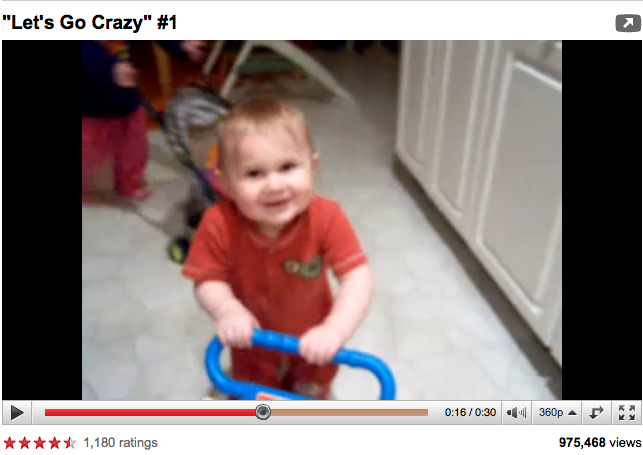
The decision is just the latest highlight in a dispute that has drawn public attention from the start.  In February 2007, Stephanie Lenz posted a video of her toddler son on YouTube. In the 29-second video, Lenz's son dances to Prince's "Let's Go Crazy," which is playing in the background. In June 2007, counsel for Universal Music sent YouTube a DMCA takedown notice pursuant to 17 U.S.C. § 512(c), claiming that the video infringed its copyright in the Prince song and requested that YouTube remove it from the website. YouTube complied and notified Lenz about the takedown. Lenz sent a counter-notification pursuant to 17 U.S.C. § 512(g), and the site put the video back up about six weeks later.    read more »

Texas Appeals Court Upholds Dismissal of Principal's Lawsuit Over Fake MySpace Page

Last week, the Fourth Court of Appeals in San Antonio, Texas upheld the trial court's dismissal of Clark High School vice-principal Anna Draker's lawsuit against two students and their parents over a fake MySpace profile. Benjamin Schreiber and Ryan Todd allegedly created a fake MySpace page for Draker in 2006, which contained her name, photo, place of employment, and explicit and graphic sexual references implying that she was a lesbian. After learning about the fake profile, Draker contacted MySpace, which promptly removed the page.

Not content to stop there, Draker sued Schreiber, Todd, and their parents, asserting claims for defamation, negligent supervision, and intentional infliction of emotional distress.  On a motion for summary judgment, the Texas trial court dismissed the defamation claim, ruling that the statements appearing in the fake profile were not defamatory as a matter of law because they asserted no facts that could be objectively verified.  The district court ruled on a separate motion that Draker's intentional infliction of emotional distress claim failed because it repackaged the same allegations as the defamation claim. Draker appealed this latter ruling only. 

The tort of intentional infliction of emotional distress may be less familiar to our readers than defamation. There are four elements of an intentional infliction of emotional distress claim:   read more »

AutoAdmit Update: "A Horse Walks Into A Bar" Gets Feisty

You know you've got a pretty good job when you turn to the first order of business for the day and read this:

NOW COMES Defendant, A horse walks into a bar, a.k.a. Ryan Mariner ("Mariner"), and specially appears, without having been properly served and without waiving his right to proper service, and files this Brief in Support of his Motion to Dismiss Plaintiff's Second Amended Complaint against him.
Gosh, I love lawsuits against pseudonymous defendants . . .

One of the John Doe defendants in the sprawling AutoAdmit litigation has come out swinging, revealing his true identity and asserting that he "has done nothing wrong." Ryan Mariner, formerly known as "A horse walks into a bar," filed a motion to dismiss on Wednesday in federal court in Connecticut, asking the court to set him free from the case, which has been going on for over a year. 

He argues that the two anonymous Yale Law students who are plaintiffs in the case have willfully failed to serve him and prosecute the action against him, despite repeated offers by his counsel to accept service of the complaint. He argues that the plaintiffs' only possible motive for continuing to name him as a defendant in their second amended complaint and yet failing to serve him "seems to be to threaten and harass him by abusing the legal system." Ouch!

Mariner opens up a surprisingly literary can of whup-ass:   read more »

Blogger Bullied Over Phrase "Branded Community"

Denise Howell at Lawgarithms points us in the direction of a recent legal threat that goes right to the intersection of trademark law and freedom of speech.

On July 26, 2008, Rob Frankel of i-legions sent an email to tech blogger Jennifer Leggio of ZDNet Feeds complaining about a post by guest author Aaron Strout that used the term "branded communities." Frankel indicated that i-legions owns a federally registered trademark in the term "branded communities" and claimed that Leggio "should not be using the term at all without our express written consent."

Strout's July 23, 2008 post functioned as a "primer" on what steps online businesses should take in evaluating their "community engagement strategies."  It used the term "branded communities" in the ordinary, if slightly business-speak-y, sense to refer to an online community sponsored by a brand.  For example, it included the following text:   read more »

Online News Site Challenges Secret Court Proceedings

Last Wednesday, the Newspaper Tree, an online news site out of El Paso, Texas, which focuses on business, politics, and culture in the region, filed a motion objecting to an El Paso federal court's sealing of plea hearings and court documents in the pre-trial phases of a large public corruption prosecution. That same day, Judge Frank Montalvo of the U.S. District Court for the Western District of Texas ordered the government to file a response by September 5. 

In May 2008, Judge Montalvo rejected a similar motion by a community activist to open the court's proceedings, ruling that the government's interest in the integrity of its ongoing investigation and in preventing witness intimidation outweighed the public's interest in access. At that time, the court released a few documents in redacted form, but refused to provide access to plea hearings (including putting the date of such hearings on the public docket or providing transcripts), plea agreements, and affidavits filed in support of warrants in the case.    read more »